
The Charleston Distance Run is America's most underrated road race
Updated: Sep 10
"Obstacles don't block the path. They are the path. There are no obstacles in running; there is only the path ahead of you—go and conquer it" - Mark Mason
Intro
Stories have a funny way of growing with time. The farther we get from the moment itself, the more our memories seem to stretch—details get blurry, distances lengthen, and simple tales turn into epic legends. No one does this better than parents. Many have heard their elders tell the stories of “walking miles to school, uphill both ways, in the pouring rain,” which somehow gains a new hardship every time it’s told.
Well as a young kid, that’s how I felt listening to my dad relive some of his glory days as a high school cross-country runner. More specifically, his stories of the team’s annual trip to Charleston, West Virginia, where they’d run a "brutal" 15‑mile race before each season. He’d talk about the insanely stacked field of competitors and fun celebrations after, but what really stood out was his description of the course’s infamous hill—a monstrous and grueling mile+ long climb.
As a young, naïve runner, I’d nod along, thinking, I’ve run some pretty big hills before… It wasn’t until more than a decade later, when I finally made the trip to Charleston myself, that I realized he hadn’t exaggerated a single bit.
Origins of America's 15 Miler
The early 70’s brought a running revolution to the United States. All over the country, many of the road races we now consider iconic were holding their inaugural events—the New York City Marathon, Atlanta’s Peachtree 10K, Washington D.C.’s Cherry Blossom 10 Miler, just to name a few. Wanting to join the momentum, Charleston, West Virginia launched a race of its own in 1973. A road event seemed like the perfect addition to the already-lively Labor Day weekend, when the Charleston Sternwheel Regatta filled the city with celebrations of its river heritage.
A local runner, Don Cohen, stepped up to design the course. Determined to create a premier event for his town, he mapped a route that highlighted Charleston’s various neighborhoods. By the time he wove together stretches near the State Capitol, along the Kanawha riverbank, through the East End, West Side, and into South Hills, the course measured out to a formidable 15 miles. The race would start and finish at the Civic Center. An iconic hopeful event needed some star power to kick it off with some excitement. The now Charleston Distance Run brought out Jesse Owens, Steve Prefontaine, Dave Wottle, Jeff Galloway, and Franci Larrieu to be involved in the weekend.

Since there were few races in the state at the time, it was difficult to know how many runners to expect. But a waived entry fee for the race would bring some major appeal. 213 runners would end up completing the race and the top 10 would receive Accutron watches as prizes. There was no electronic timing, just the old school way of results – stop watches and clip boards. Jeff Galloway, the running legend in the making, finished first overall in 1:16:29 with Jacqueline Hanson, Boston marathon champion, taking first for women in 1:39:28.

“Last Saturday I watched one of the finest things to happen in our city in the 17 years I’ve been here. It was the sight of 223 runners taking off in the first of what I hope is many more 15-mile Charleston Distance Runs.” - Bill Smith (via All Bases in the Charleston Daily Mail 1973)
America's 15 Miler was born.

The Epicenter of US Track and Field
The following year, the race would see tremendous growth. Skyrocketing from the previous 213 finishers up to nearly 1600 entrants. It would also see a finish line change to Laidley Field. Momentum was building towards becoming a staple road race in the region.

However, race weekend in Charleston would draw attention well beyond just the 15 mile race... After the inaugural year, Don Cohen made his way up to Canada. During his time up north, he happened to come across an induction ceremony of three athletes into the Canadian Long Distance Runners Hall of Fame. Thinking about if the United States had a similar hall to recognize athletes greatness, he made some calls when he returned home and found out there was none. He would then found the U.S. National Track and Field Hall of Fame and it's home for that first year would be on Kanawha Blvd. at the Civic Center in Charleston. And the first induction ceremony would take place on the Charleston Distance Run weekend, inducting twenty six running greats - 21 athletes, 3 coaches, and 2 contributors. Showing how much this event truly has a massive impact in the history of running in this country. Today, the Hall is located in NYC.


Greatness in the hills of Charleston
Having now established a premier event and being the spotlight for running in the US, the Charleston Distance Run became a stage to showcase and honor some of the most elite runners while at the same time creating an environment for all runners to be involved. In 1975, "A Salute to Pre" was set on the back of the participants sleeveless T-Shirts to honor the American distance running legend who had passed earlier that year. His parents accepted a portrait of Pre from Charleston artist Pat Schell. Also in that third year, a free pre-race pasta dinner was a welcomed addition (a tradition that still stands today).
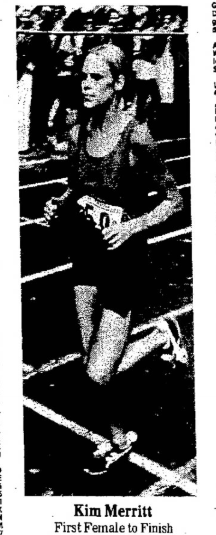
In 1976, Olympic gold medalist Frank Shorter won the Distance Run in 1:14:37. "It felt like a marathon because those hills tire you out." That year, he also finished with a silver medal in the marathon at the Montreal Olympic Games. Kim Merritt would win 3 straight CDR titles from 1975-1977. During that time, she also won the Boston Marathon and NYC Marathon as well as set the American record for the distance. America's greatest were
showing up the take on the hills of Charleston amidst their other incredible achievements.

The list of legends continued to grow as the 80's and 90's progressed. On the men's side, US Champion and West Virginia native Steve Taylor, would claim 3 titles in '85, '87, and '89. Mark Curp, former world record holder in the half marathon, won 3 straight from '90-'92. Ed Eyestone, two-time US Olympic marathoner and now BYU's famed coach, won in '93. Bill Rodgers, America's marathon phenom, competed and placed highly numerous times. But it would be Gideon Mutisya, of Kenya, who would claim the most greatness in the Distance run, winning 6 times (1994, 1995, 1996, 1997, 2000, 2008) and setting the blistering course record of 1:12:24 in '96 that still stands to this day.
For the women, Grete Waitz, Norwegian running legend, won in '85 with a course record. Only to be broken 2 years later, by Priscilla Welch, British record holder, in 1:24:52 which has been held to this day. Julie Isphording, Olympic marathoner from Cincinnati, won four times in '82, '86, '90', and '91. Hungarian Olympian, Karolina Szabo, won in '94. Canadian Olympian, Danita Bartoszek, won in '98. And Russian Olympian, Svetlana
Zakharova, won in 2000.
Just a few of the incredible runners who helped establish the Charleston Distance Run as a marquee Midwest race through it's first 3 decades.
CDR in the New Millenium
As the years progressed and the sport of running evolved, so did the Distance Run. In 2002, finisher medals were added. In 2003, chip timing was introduced. In 2004, relays joined the lineup. Each addition played a key role in growing the event and making it more accessible to all runners. Prize money also remained a major draw for elite athletes both locally and abroad.
Throughout the first decade of the 2000s, the Distance Run was largely dominated by East African runners, with a new men’s champion nearly every year—aside from Gideon, who claimed his sixth crown. On the women’s side, a similar trend emerged with a string of standout Russian athletes. However, the most dominant presence came from a Kenya‑born, Charleston‑based runner Maria Busienei who earned four titles in ’04, ’07, ’08, and ’10—tying the women’s record for wins held by Julie Isphording.

In 2010, prize money was removed, and winning times dropped significantly, though local champions began to reemerge. Prize money returned the following year, but the winning times never fully rebounded. Since 2010, the men’s winning time has dipped under 1:20 only three times, and the women’s winning time hasn’t gone under 1:30 since 2009.

Regardless of these shifts, the Distance Run has grown into a top‑tier experience for every runner. To paint a picture of what the full weekend looked like: T‑shirts, finisher medals, a Friday pasta dinner and runners’ clinic, a Saturday awards banquet, and results printed in the paper. A full community celebration built around one unforgettable race.
“The more things change, the more things stay the same.”
A half‑century in the books. The first 50 years of the Charleston Distance Run saw more evolution in the sport of running than anyone could’ve imagined. Back in the early ’70s, running was still a novelty, and premier racing events were few and far between. That landscape allowed races like the Distance Run to draw some of the world’s top athletes to the streets of Charleston. Over time, that front‑end firepower has naturally faded, but the race has evolved into a showcase for local stars while still holding space for everyone in the running community.
Throughout that time, the race director role saw many changes of guard, each person bringing new ideas and innovations to draw more attention to the event. Slight course variations were critiqued and adjusted over the years, with the hills remaining an ever‑present factor. Despite all these shifts, one thing at the Distance Run has stayed constant: the 15‑mile distance.

A testament to the event’s true uniqueness, it has offered an unmatched challenge for runners for half a century. That consistency didn’t come without scrutiny—at one point, switching to the standard half‑marathon distance was suggested to combat declining participation. Even so, the Committee voted to stick with the tried‑and‑true distance, and it remains in place today. It’s become an event that reflects both its history and the runners who keep showing up.
Why the Charleston Distance Run should be added to your Bucket List
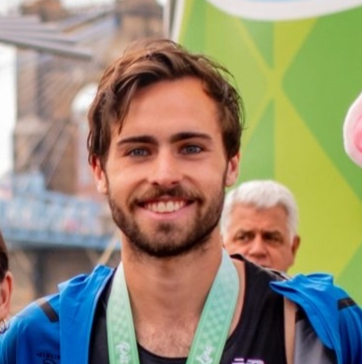
To bring this full circle back to my intro, my brother and I finally made the trip to Charleston in 2023 to see how my dad’s old stories lined up with reality. It happened to be the 50th anniversary, which made it even cooler. I can sum it up by saying that halfway up Capitol Punishment Hill, I started thinking my dad hadn’t warned me nearly enough. Despite the mountainous climb, it ended up being one of my favorite race experiences of all time. From the pre‑race pasta party to the friendly runners to the celebrations afterward, it was special all around. You can feel the pride of this community and the people who make the event happen.
There’s something special about a race that has grown up alongside the sport of running in this country—an event that has evolved through different decades, celebrating runners from both the home turf and far beyond. One that has adapted to give more people the chance to challenge themselves and try something different. And despite all that evolution, it has stayed remarkably true to itself. This is America's 15 Miler and I hope it always will be.
Running is a wonderful thing, and we’re seeing it grow now more than ever. It’s the most accessible and viral it has ever been. But sometimes I sit back and see mountains of data, obsessions with PRs and comparisons, and events focused solely on the fastest possible courses. There’s something beautiful about forgetting all of that sometimes and just racing for the sake of racing.
So with all that said… how about 15 miles and one big ass hill?
Course Records
15 Miler
Gideon Mutisya - 1:12:24 (1996)
Priscilla Welch - 1:24:52 (1987)
5K
Michael Cox - 14:25 (2001)
Elise Leveel - 18:10.1 (2021)
Charleston Distance Run Winners | ||||
Year | Men's Winner | Time | Women's Winner | Time2 |
1973 | Jeff Galloway | 1:16:29 | Jacqueline Hanson | 1:39:28 |
1974 | Philip Ndoo | 1:18:03 | Catherine Shrader | 1:38:13 |
1975 | John Vitale | 1:17 | Kim Merritt | 1:32 |
1976 | Frank Shorter | 1:14:37 | Kim Merritt (2) | 1:28:50 |
1977 | William Haviland | 1:16:42 | Kim Merritt (3) | 1:30:12 |
1978 | William Haviland (2) | 1:14:26 | Kitty Consolo | 1:34:30 |
1979 | Robert Perkins | 1:17:37 | Karen Doppes | 1:34:10 |
1980 | William Haviland (3) | 1:15:12 | Karen Cosgrove (2) | 1:31:48 |
1981 | Terry Baker | 1:15:43 | June Keller | 1:37:41 |
1982 | Terry Baker (2) | 1:14:15 | Julie Isphording | 1:26:17 |
1983 | Mark Stickley | 1:16:02 | Beth Dillinger | 1:35:09 |
1984 | Mark Stickley (2) | 1:14:33 | Karen Cosgrove (3) | 1:30:30 |
1985 | Steve Taylor | 1:16:25 | Grete Waitz | 1:24:57 |
1986 | Don Norman | 1:13:54 | Julie Isphording | 1:29:19 |
1987 | Steve Taylor (2) | 1:14:31 | Priscilla Welch | 1:24:52 |
1988 | Don Norman (2) | 1:15:52 | Mary Heidelk | 1:31:19 |
1989 | Steve Taylor (3) | 1:15:27 | Priscilla Welch (2) | 1:27:43 |
1990 | Mark Curp | 1:13:47 | Julie Isphording | 1:31:08 |
1991 | Mark Curp (2) | 1:16:50 | Julie Isphording | 1:33:18 |
1992 | Mark Curp (3) | 1:15:40 | Debbi Kilpatrick-Morris | 1:28:39 |
1993 | Ed Eyestone | 1:14:52 | Debbi Kilpatrick-Morris (2) | 1:27:23 |
1994 | Gideon Mutisya | 1:13:38 | Karolina Szabo | 1:24:53 |
1995 | Gideon Mutisya (2) | 1:12:55 | Jennifer Martin | 1:27:12 |
1996 | Gideon Mutisya (3) | 1:12:24 | Alice Thurau | 1:29:42 |
1997 | Gideon Mutisya (4) | 1:16:34 | Kelly Keeler | 1:28:35 |
1998 | Andrew Musuva | 1:14:01 | Danita Bartoszek | 1:30:05 |
1999 | Simon Sawe | 1:14:53 | Nadya Gvselschikova | 1:27:16 |
2000 | Gideon Mutisya (5) | 1:15:30 | Svetlana Zakharova | 1:27:17 |
2001 | Wilson Onsare | 1:14:47 | Tatiana Titova | 1:31:04 |
2002 | Zabloh Mokaya | 1:15:07 | Heather Bury | 1:30:24 |
2003 | Hillary Lelei | 1:16:06 | Silvia Skvortsova | 1:31:52 |
2004 | Douglas Momanyi | 1:17:08 | Maria Busienei | 1:33:59 |
2005 | Francis Bowen | 1:15:31.75 | Ramilia Burangulova | 1:30:52.90 |
2006 | Jacob Yator | 1:15:19.45 | Anne Jelagat | 1:27:43.35 |
2007 | Tesfaye Girma | 1:16:25.35 | Maria Busienei (2) | 1:27:37.95 |
2008 | Gideon Mutisya (6) | 1:22:45.85 | Maria Busienei (3) | 1:33:31.45 |
2009 | Kipyegon Kirui | 1:14:55.22 | Buzunesh Deba | 1:28:47.35 |
2010 | Jason Pyles | 1:25:44.58 | Maria Busienei (4) | 1:36:03.88 |
2011 | Joe Moore | 1:20:12.2 | Emily Chaney | 1:35:54.29 |
2012 | Jeff Weiss | 1:21:14.2 | Esther Erb | 1:36:06.3 |
2013 | Kiprono Kurgat | 1:16:29.1 | Susan Jerotich | 1:31:05.6 |
2014 | Jeff Weiss | 1:22:36.6 | Sarah Glenn | 1:42:12 |
2015 | Bryan Morseman | 1:22:14 | Sarah Glenn (2) | 1:41:05 |
2016 | Juris Silenieks | 1:21:42.8 | Clara Santucci | 1:33:13.6 |
2017 | Jason Pyles (2) | 1:31:48.3 | Tammy Slusser | 1:45:36.6 |
2018 | Bryan Morseman | 1:23:45.3 | Purity Munene | 1:34:43 |
2019 | Daniel Jaskowak | 1:20:12.1 | Marian Pyles | 1:47:47.0 |
2021 | Jack Mastandrea | 1:16:16.2 | Purity Munene (2) | 1:32:07.7 |
2022 | Caleb Bowen | 1:22:46.8 | HollyAnn Swann | 1:30:42.5 |
2023 | Colin Martin | 1:20:32.5 | Ashley Wilson | 1:44:10.7 |
2024 | Dylan Gearinger | 1:20:26.46 | Lydiah Nieri | 1:40:31.66 |
2025 | Hector Falcon | 1:19:55.75 | Jenny Brewer | 1:40:02.42 |
2026 | Hector Falcon (2) | 1:21:50.2 | HollyAnn Swann (2) | 1:40:26.5 |
Special thanks to Kelly Holley at the Kanawha County Public Library for the huge assist in getting old photos from the non-digitized papers. This was such a massive help. Support your local libraries!
Credits to the Charleston Gazette-Mail for capturing 50 years of history for this amazing event!
Thank you to all the race directors below and every other team member, volunteer, etc. who have helped put this on.
Race Directors
Don Cohen, 1973-1976, 1989
Mike Reed, 1977-1984
Sherman “Nemo” Nearman, 1985-1988
Danny Wells, 1989-2001
Kelly Castleberry, 2002-2003
David Fenwick, 2004-2006
Gary Smith, 2007-2008
Aaron Allred, 2009-2010
John Palmer, 2011-2023
Carol Phipps Haid, 2024-Present
Also, thank you to the CDR staff for the access to it's such well preserved race results and history. I'm glad to take my own spin on it!
I do my best to keep things accurate. Any corrections or thoughts/comments, please post below!


Needs more Whiskey Glasses
4/5 stars